
An Authentic Assessment Using Technology
Blended Math Course for Homeschoolers
This ePortfolio presents the design, implementation, and reflection of a blended mathematics course developed for high school homeschool students. Its central aim is to demonstrate the effectiveness of purposeful instructional planning, strategic technology integration, and authentic assessment practices in establishing a rigorous, adaptable, and student-focused learning environment. Included artifacts provide evidence of curriculum development, lesson planning, instructional videos, as well as formative and summative assessments, accompanied by reflective analyses that highlight pedagogical rationale and professional growth. This ePortfolio serves as a comprehensive demonstration of my ability to align learning objectives, instructional approaches, and assessment methods within a blended framework that accommodates diverse learners, cultivates mathematical proficiency, and encourages learner autonomy. The contents underscore my dedication to effective instructional design, judicious application of educational technology, and ongoing advancement to address the academic and developmental needs of homeschool students.
Reflection on Authentic Assessment Using Technology
E-portfolio assessments are digital compilations of students’ academic work, accompanied by structured reflections on their learning processes. This form of assessment is grounded in a social constructivist framework, emphasizing knowledge construction through active engagement within learner-centered environments. Through interaction with instructional materials, peers, and instructors, students collaboratively construct meaning and deepen understanding, positioning learning as a dynamic and socially mediated process (Flynn, 2022). The development of an ePortfolio to showcase artifacts generated during the design of a blended high school algebra course for homeschoolers exemplifies authentic assessment enhanced by instructional technology. Unlike conventional assessments, which predominantly evaluate content retention, the ePortfolio necessitated sustained reflection, application of pedagogical frameworks, and deliberate instructional planning (Flynn, 2022). The ePortfolio approach not only revealed knowledge of instruction but also demonstrated its application in developing coherent, engaging, and learner-centered educational experiences (Kahn, 2023).

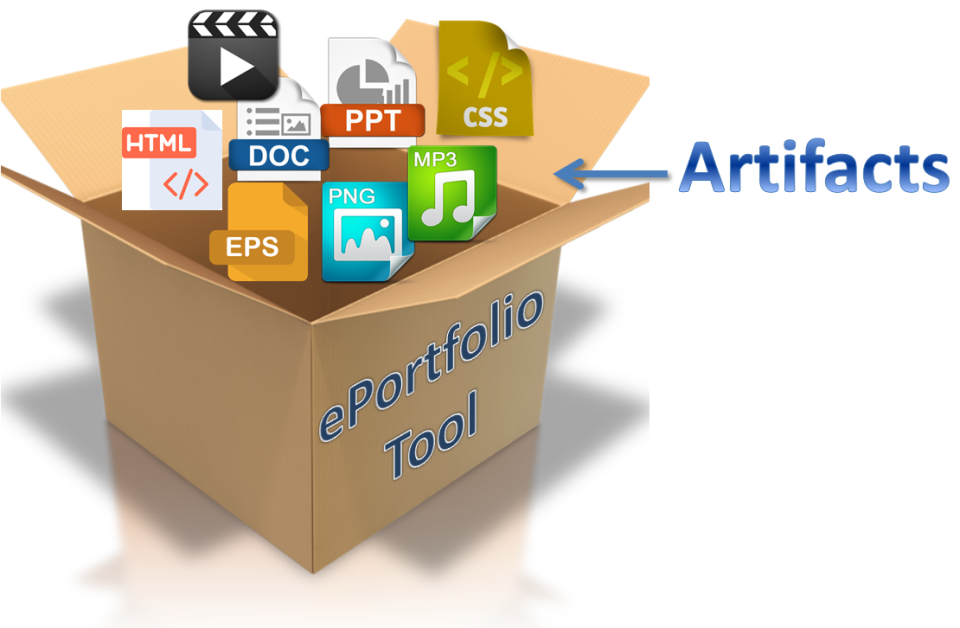
Serving as a comprehensive representation of instructional decision-making throughout the course design, the ePortfolio included diverse artifacts, such as lesson plans, flipped lesson videos, interactive digital activities, assessments, and curated digital resources, that documented each phase of the course’s development (Yamaguchi et al., 2025).
Collectively, these components illustrate intentional alignment among content standards, learning objectives, instructional strategies, and assessments, a foundational element of effective blended learning design. Such alignment ensures that technology is leveraged to enrich learning rather than merely digitize conventional practices.
Initial artifacts emphasized content delivery, while subsequent materials demonstrated thorough integration of student-centered approaches, including formative assessment, real-world applications, and the promotion of learner autonomy. The implementation of the ASSURE model in mathematics curriculum design provided evidence supporting the adoption of flipped classroom methodologies. For instance, incorporating flipped lesson videos and guided interactive tools demonstrated how technology can transition direct instruction beyond class time, allowing synchronous sessions to focus on problem-solving, peer collaboration, and individualized support. This progression would not have been as observable or measurable through isolated exams or assignments (Kahn, 2023).
The reflective nature of the ePortfolio fostered metacognitive growth (Flynn, 2022). Curating and annotating artifacts require justification of instructional choices and clarification of each component’s contribution to student learning within a blended environment. This process reinforced the understanding of how algebra concepts, such as slope, midpoint, and exponential models, can be connected to authentic, real-world scenarios. It also highlighted the need to design assessments that evaluate both procedural proficiency and conceptual understanding.
From a technological standpoint, the ePortfolio demonstrated the capacity of digital tools to facilitate authentic assessment through flexibility, accessibility, and multimodal expression. Integrating videos, interactive activities, visuals, and written explanations enabled a more robust demonstration of learning compared to traditional paper-based assessments (Yamaguchi et al., 2025). This parallels students’ experiences in blended classrooms, where multiple formats are employed to evidence comprehension. Thus, the ePortfolio functioned not only as an assessment product but also as a model for equitable instructional practice. Additionally, the ability to revise and expand digital artifacts supported ongoing improvement, rendering the assessment iterative rather than finite. This aligns with authentic assessment principles that view learning as a continuous process. The ePortfolio provides not merely documentation of completed work but serves as a dynamic record of professional development and adaptability, essential competencies for educators in technologically advanced and evolving educational settings.

The task of designing a blended algebra course and presenting it via an ePortfolio closely reflects actual instructional responsibilities, requiring skills directly transferable to professional practice, including curriculum development, instructional design, technology integration, and reflective evaluation. Consequently, this form of authentic assessment felt purposeful and relevant, enhancing engagement and accountability.
In summary, the ePortfolio assignment effectively demonstrated that authentic assessments, when supported by technology, provide comprehensive and meaningful measures of learning(Yamaguchi et al., 2025). By presenting instructional artifacts from a blended high school algebra course, the assessment captured both the process and the outcome of instructional design. It validated the importance of reflective practice, alignment, and intentional technology integration while providing a model for assessment practices adaptable to blended and online learning environments.